Weather data · Expedition weather
Everest Base Camp trek weather by month: when to go
By AdventureLive · Updated
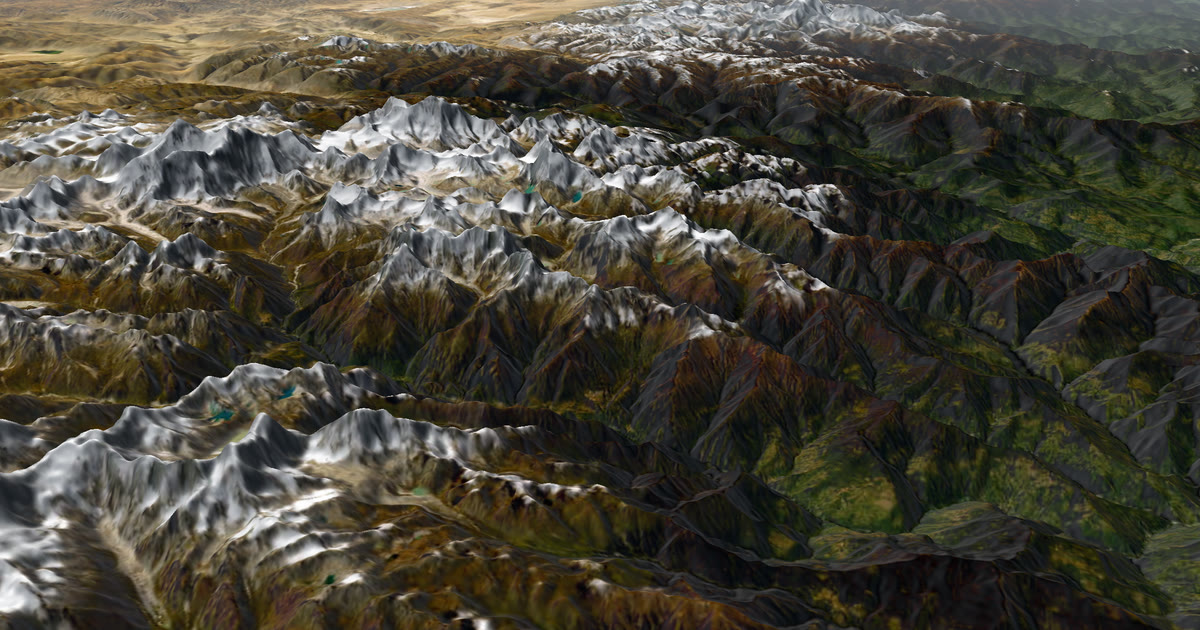
The Everest Base Camp trek has two weather problems: the monsoon rain from June to September and the cold from November to March. This guide shows both, month by month, for Lukla, for Namche Bazaar and for the air at Base Camp's altitude, from ten years of records.
When is the monsoon on the Everest Base Camp trek?
June to September. Lukla averages 321 mm in June, 606 mm in July, 503 mm in August and 307 mm in September. Namche averages 218, 460, 375 and 212 mm in those months.
The pre-monsoon builds in May, at 174 mm in Lukla and 117 mm in Namche. October falls away fast, to 113 mm in Lukla and 56 mm in Namche.
What is each month like at Lukla and Namche?
Rain is the monthly total in mm. "Afternoon" is 14:45 local time and "pre-dawn" is 05:45 local time (Nepal is UTC+5:45), in °C.
| Month | Lukla rain | Lukla afternoon / pre-dawn | Namche rain | Namche afternoon / pre-dawn |
|---|---|---|---|---|
| Jan | 40 | -0.7 / -10.2 | 25 | -4.8 / -14.0 |
| Feb | 39 | 1.3 / -8.7 | 24 | -2.9 / -12.5 |
| Mar | 63 | 3.6 / -5.5 | 42 | -0.9 / -9.6 |
| Apr | 79 | 6.6 / -1.0 | 55 | 2.3 / -5.1 |
| May | 174 | 8.6 / 2.9 | 117 | 4.8 / -0.9 |
| Jun | 321 | 11.6 / 7.5 | 218 | 8.4 / 4.1 |
| Jul | 606 | 12.3 / 9.0 | 460 | 9.2 / 5.7 |
| Aug | 503 | 12.5 / 8.6 | 375 | 9.3 / 5.3 |
| Sep | 307 | 11.5 / 7.0 | 212 | 8.2 / 3.7 |
| Oct | 113 | 8.5 / 2.1 | 56 | 4.9 / -1.6 |
| Nov | 29 | 5.8 / -2.8 | 6 | 2.2 / -6.4 |
| Dec | 26 | 2.8 / -6.4 | 12 | -0.9 / -9.9 |
Source: ERA5 (Copernicus Climate Change Service), 2015–2024.
Method: bilinear-interpolated 0.25° ERA5 values. Rain is the daily mean of total precipitation times the days in the month. Temperatures are the monthly means for the 09:00 UTC and 00:00 UTC hours.
Caveats:
- ERA5 is a grid of about 31 km. In the Himalaya one cell averages deep valleys and high ridges, so surface values at Lukla and Namche are smoothed. Grid-cell rain can differ a lot from a single valley.
- Rain totals are not rain-day counts.
- These are monthly means of two hours of the day. A clear night above Namche can be colder than the figure, and a sunny afternoon on the trail can feel warmer.
When is the driest time to trek?
November to February. Lukla averages 26 to 40 mm a month, and Namche 6 to 25 mm. Namche is the driest of all in November (6 mm) and December (12 mm).
The cost is the cold. In January, Namche averages -14.0 °C before dawn and -4.8 °C in the afternoon. Lukla averages -10.2 °C before dawn. Water bottles, boots and batteries all feel it.
How cold does it get at Base Camp altitude?
The cold is steady and deep. Base Camp is near 5,500 m, close to the 500 hPa pressure level, so we read the free air at that level instead of the ground. Temperatures are in °C.
| Month | Afternoon | Pre-dawn |
|---|---|---|
| Jan | -14.9 | -16.1 |
| Feb | -13.9 | -15.4 |
| Mar | -11.9 | -13.6 |
| Apr | -8.8 | -10.9 |
| May | -5.4 | -7.3 |
| Jun | -1.2 | -3.1 |
| Jul | -0.3 | -1.7 |
| Aug | -0.5 | -1.9 |
| Sep | -1.9 | -3.4 |
| Oct | -6.1 | -7.7 |
| Nov | -9.2 | -10.9 |
| Dec | -11.7 | -13.3 |
Temperature at this level is sound, but it is free air, not a reading on the glacier. A sheltered camp in the sun can feel warmer, and a night on the ice colder.
We do not give a wind figure here, and you should not read one into this table. In our grid cell the 500 hPa level sits close to the model's ground, and a monthly mean of the wind vector smooths out the gusts. It understates what an exposed ridge feels. Wind on the trek is a day-to-day question for your guide and the current forecast.
Which months are best?
It depends on whether you fear rain or cold more. These are readings of the numbers above, not rules.
- October and November: the best balance in the data. The rain has dropped away (113 mm in Lukla in October, 29 mm in November), Lukla afternoons are 8.5 and 5.8 °C, and Base Camp air is -6.1 °C by day in October and -9.2 °C in November.
- April: warmer than winter, with Base Camp air at -8.8 °C by day and 79 mm of rain in Lukla. May is warmer still, but the rain starts: 174 mm in Lukla.
- December to February: the driest and the coldest. Choose it only if you are kitted for -14 °C mornings in Namche.
- June to September: warm (Lukla afternoons of 11.5 to 12.5 °C), but 300 to 600 mm a month in Lukla. Expect wet trails and cloud.
What does this mean for the trek?
Use typical weather to pick a month, then to pack.
- Pack for the swing. In October, Namche goes from -1.6 °C before dawn to 4.9 °C in the afternoon. In January it is -14.0 °C to -4.8 °C.
- Lukla sits warmer than Namche by about 3 to 4 °C in the afternoon through the year, and the cold deepens as you climb.
- In the monsoon, build in spare days. Rain totals are cell averages, so a valley can be wetter or drier.
Typical weather helps you choose and prepare. Always check the forecast, local warnings and your guide's advice before you go.
Plan it in AdventureLive
The trek has stretches with little or no phone signal. A Garmin inReach or SPOT sends positions by satellite. Link it to AdventureLive, plan the trek at /app/ as a trip with legs, with a GPX or with no route, and share the link.
When you plan each leg, AdventureLive shows the typical weather for its dates from ten years of records, then the forecast for about the next 10 days once the trek is near. Followers open the link in any browser, with no app or account. They see your dot on a 3D satellite map, when you were last seen, and the weather where you are now and for the next 48 hours, with alerts for strong wind and gales, freezing or severe cold, heat, heavy rain and thunderstorms.
If you send a HELP message from the tracker, your home contacts get an email with the time and the place. Rescue itself is Garmin Response's or SPOT's GEOS centre's job. AdventureLive is free, thanks to ProLend.
See the set-up in Everest Base Camp live tracking. For another high mountain, see Kilimanjaro summit weather, and for a desert, Marathon des Sables weather. The expedition weather hub has the rest.
Contains modified Copernicus Climate Change Service information (2026). Neither the European Commission nor ECMWF is responsible for any use of this information. The data is licensed under CC BY 4.0.
Questions people ask
- When is the monsoon on the Everest Base Camp trek?
- June to September. Lukla averages 321 mm in June, 606 mm in July, 503 mm in August and 307 mm in September. Namche averages 218, 460, 375 and 212 mm in the same months.
- What is the driest time to trek to Everest Base Camp?
- November to February. Lukla averages 26 to 40 mm a month, and Namche 6 to 25 mm. Namche is driest in November, at 6 mm, and December, at 12 mm. These months are also the coldest.
- How cold is Namche Bazaar in winter?
- In January, Namche averages -14.0 °C before dawn and -4.8 °C in the afternoon. February is -12.5 °C before dawn. Real mornings in a lodge valley can differ from this smoothed grid cell.
- How cold is it at Base Camp altitude?
- At about 5,500 m (the 500 hPa level), mean air temperature in the afternoon is -14.9 °C in January, -8.8 °C in April, -6.1 °C in October and -9.2 °C in November. Pre-dawn is 1 to 2 °C colder.
- Can my family follow my Everest Base Camp trek?
- Yes. Link a Garmin inReach or SPOT to AdventureLive, plan the trek as a trip with a leg, and share the link. Followers see your dot on a 3D map and the weather where you are, with alerts for strong wind, severe cold and heavy rain.
- Is this wind at Base Camp?
- No. We leave out our wind figure for that altitude on purpose. In this grid cell the 500 hPa level is close to the model's ground, so the monthly mean understates wind on an exposed ridge. Ask your guide for the current forecast.
Sources
Related guides
 Guide · Expedition weatherExpedition weather by month, from ten years of recordsTypical weather by month for Kilimanjaro, the Atlantic row, the Marathon des Sables and Namibia, from ten years (2015–2024) of ERA5 records.
 How-to · Live trackingHow to let family track you live on Everest Base CampMobile signal fades above Dingboche on the Everest Base Camp trek. Carry a tracker and share one AdventureLive link so family follow you. Aconcagua too.
 Weather data · Expedition weatherKilimanjaro summit weather by month: wind, cold and wind chillTen years of ERA5 records for Uhuru Peak: summit-night temperature, wind, wind chill and rain by month, and which months are driest and least windy.
 Weather data · Expedition weatherMarathon des Sables weather: how hot is April in the Sahara?Ten years of ERA5 records for Merzouga and Erg Chebbi: April afternoons average 29.4 °C, pre-dawn 17.7 °C, humidity 13%. All twelve months in a table.
 Guide · Satellite trackersinReach vs SPOT vs ZOLEO for expeditionsinReach, SPOT and ZOLEO compared for expeditions: networks, coverage, tracking intervals, SOS, plan prices and weights, and which work with AdventureLive.