Weather data · Expedition weather
Elbrus weather by month: summit wind, cold and wind chill
By AdventureLive · Updated
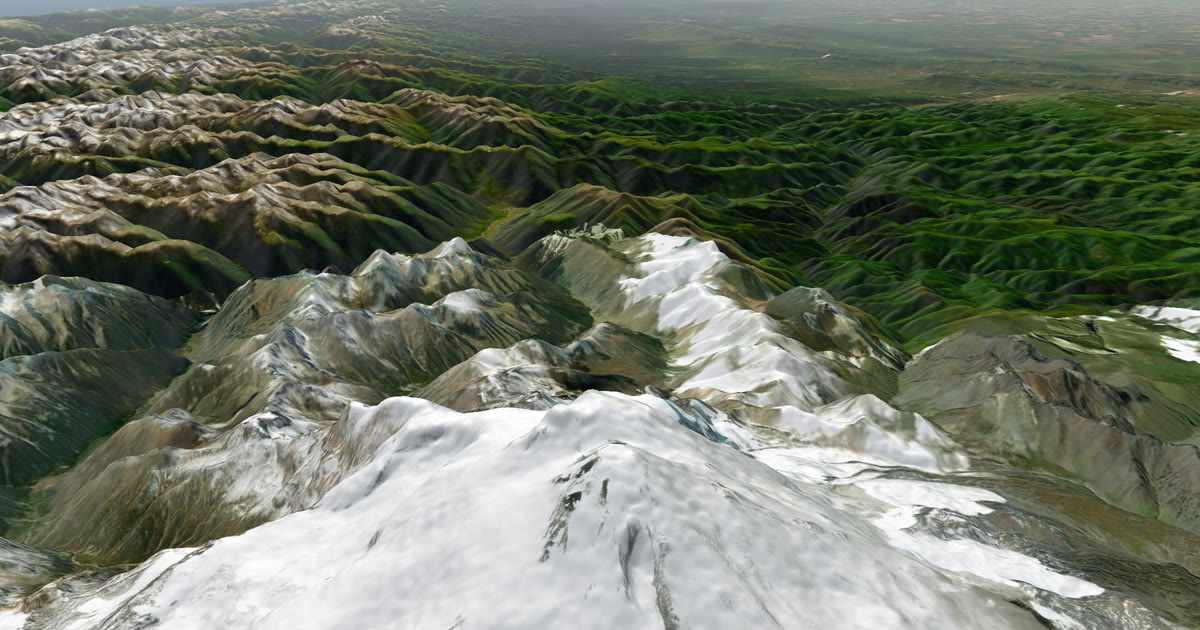
This guide shows the wind and cold by month, from ten years of records, and where the calmer months fall.
What is the best month to climb Elbrus?
June and August, in our wind data. At 500 hPa, about 5,600 m and the height of the summit, 73.6% of sampled hours in June and 69.7% in August are at or below 40 km/h. That is the climbable window share.
July is lower, at 55.1%, with a mean wind of 37.8 km/h against 32.1 km/h in June. May is 56.8% and September 54.0%. In winter it is 32.4% in January and 32.5% in February. Even in June, about one sampled hour in four is above 40 km/h.
How does the year run from spring to autumn?
The share of calm hours at summit height climbs through the spring and peaks in June. It is 45.4% in April and 56.8% in May, then 73.6% in June. It dips in July to 55.1%, recovers in August to 69.7%, and falls again through September (54.0%) and October (46.0%).
So there are two lighter spells in our data, one in June and one in August, with a windier July between them. That is an average over ten years. Any single July can be calmer than a June, which is why you read the forecast as the date nears.
Is there an official season?
We found no official season statement for Elbrus, so we do not give one. Access, permits and conditions are set locally, so check them with your operator before you plan. Our data shows only when the wind is lightest.
What does the wind look like month by month?
Free air at 500 hPa (about 5,600 m, summit height). "Hours at or below 40 km/h" is the share of sampled hours with wind at or under 40 km/h. "90th percentile" is the wind speed that 1 hour in 10 is at or above. "Coldest tenth" is the wind chill that 1 hour in 10 is at or below.
| Month | Hours at or below 40 km/h | Mean wind (km/h) | 90th percentile (km/h) | Mean temp (°C) | Mean wind chill (°C) | Coldest tenth, wind chill (°C) |
|---|---|---|---|---|---|---|
| Jan | 32.4% | 55.0 | 93.4 | -26.2 | -43.6 | -52.6 |
| Feb | 32.5% | 56.6 | 96.5 | -25.2 | -42.4 | -51.6 |
| Mar | 44.0% | 50.6 | 91.8 | -24.0 | -39.9 | -49.5 |
| Apr | 45.4% | 48.7 | 88.1 | -20.3 | -34.8 | -42.2 |
| May | 56.8% | 40.4 | 72.8 | -16.6 | -28.9 | -34.8 |
| Jun | 73.6% | 32.1 | 56.8 | -12.0 | -21.9 | -27.6 |
| Jul | 55.1% | 37.8 | 64.1 | -9.1 | -18.7 | -23.4 |
| Aug | 69.7% | 32.1 | 55.0 | -9.1 | -18.0 | -22.2 |
| Sep | 54.0% | 39.8 | 71.9 | -12.4 | -23.1 | -29.6 |
| Oct | 46.0% | 47.3 | 86.0 | -16.3 | -29.4 | -38.0 |
| Nov | 38.6% | 52.3 | 89.8 | -20.3 | -35.3 | -43.3 |
| Dec | 41.5% | 52.1 | 99.9 | -23.7 | -39.6 | -49.6 |
The mean wind is 32.1 km/h in June and August, and 56.6 km/h in February.
What about the upper mountain?
At 550 hPa, about 4,800 m, the wind is lighter in every month. August has 80.6% of hours at or below 40 km/h, June 79.6%, July 66.3% and May 62.9%.
| Month | Hours at or below 40 km/h | Mean wind (km/h) | 90th percentile (km/h) | Mean temp (°C) | Mean wind chill (°C) |
|---|---|---|---|---|---|
| Jan | 38.6% | 49.4 | 83.0 | -21.3 | -36.4 |
| Feb | 39.1% | 50.3 | 89.0 | -20.4 | -35.2 |
| Mar | 50.4% | 44.6 | 80.7 | -19.1 | -32.6 |
| Apr | 52.9% | 42.8 | 76.8 | -15.4 | -27.4 |
| May | 62.9% | 35.7 | 65.2 | -11.8 | -21.8 |
| Jun | 79.6% | 28.2 | 50.2 | -7.2 | -15.1 |
| Jul | 66.3% | 32.3 | 55.5 | -4.5 | -12.1 |
| Aug | 80.6% | 27.3 | 47.8 | -4.2 | -11.2 |
| Sep | 62.8% | 34.9 | 64.4 | -7.7 | -16.4 |
| Oct | 53.3% | 41.5 | 76.3 | -11.6 | -22.4 |
| Nov | 44.7% | 46.8 | 81.6 | -15.4 | -28.1 |
| Dec | 49.0% | 46.4 | 88.3 | -18.8 | -32.4 |
How cold does it feel?
At summit height the free air averages -12.0 °C in June and -9.1 °C in August. A typical June hour feels like -21.9 °C with the wind, and the coldest tenth feels like -27.6 °C or colder. A typical August hour feels like -18.0 °C. In January a typical hour feels like -43.6 °C.
Wind chill is computed from the free-air temperature and wind. On the ground, in sun or out of the wind, it differs, and gusts on the exposed slopes are stronger than these averages.
How did we get these numbers?
We used ERA5, the Copernicus Climate Change Service reanalysis, for 2015 to 2024. ERA5 is a model on a grid of about 31 km, not a weather station. The summit sits well above the grid cell's surface, so we read pressure levels, the air at a fixed pressure, as a stand-in for summit air. The heights are approximate.
The values are interpolated to 43.353 N, 42.439 E at 00, 06 and 12 UTC, which is 03:00, 09:00 and 15:00 Moscow time. Per month we pool every sampled hour, about 900 for most months, and report the mean, the 90th percentile, the share at or below 40 km/h and the wind chill. Wind is the scalar speed. Wind chill uses the NWS and Environment Canada formula. Ten years is a short record.
What does this mean for planning?
- Choose from the calm share. June and August lead, and July is windier in our data.
- Do not read "calm" literally. A quarter of June hours at the summit are still above 40 km/h.
- Pack for wind chill. It runs about 10 °C below the air temperature in June.
- Check access and conditions with your operator.
These are typical conditions, not a forecast. See how to plan a summit day around the weather, and compare with Mont Blanc and Kilimanjaro. The expedition weather hub has the other mountains.
Plan it in AdventureLive
Plan the trip and its legs at AdventureLive. Each leg shows the typical weather for its dates from ten years of records, then the forecast for about the next 10 days once it is near. Link an inReach or SPOT, as described in Everest Base Camp live tracking, and send one link home.
Followers see your dot on a 3D map, when you were last seen, and the weather where you are now and for the next 48 hours, with alerts for strong wind and severe cold. It is free, thanks to ProLend. A forecast is a guide: check local forecasts and warnings.
Contains modified Copernicus Climate Change Service information (2026). Neither the European Commission nor ECMWF is responsible for any use of this information.
Questions people ask
- What is the best month to climb Elbrus?
- In our wind data, June and August. At summit height, 73.6% of sampled hours in June and 69.7% in August are at or below 40 km/h. July is 55.1% and September 54.0%. We found no official season, so check with your operator.
- Does Elbrus have an official climbing season?
- We found no official season statement, so we give none. Access and permits are set locally. Check them with your operator.
- How windy is the summit of Elbrus?
- At 500 hPa, about 5,600 m, the mean wind is 32.1 km/h in June and August, and 56.6 km/h in February. The 90th percentile is 56.8 km/h in June and 96.5 km/h in February. These are free-air values, not gusts.
- How cold is the summit of Elbrus?
- The free air at summit height averages -12.0 °C in June and -9.1 °C in July and August. With the wind, a typical June hour feels like -21.9 °C, and the coldest tenth feels like -27.6 °C or colder.
- Is July windier than June on Elbrus?
- In our data, yes. At summit height the mean wind is 37.8 km/h in July against 32.1 km/h in June, and 55.1% of July hours are at or below 40 km/h against 73.6% in June.
- Can my family follow me on Elbrus?
- Yes, if your tracker is on and sending. Link an inReach or SPOT to AdventureLive and share one trip link. Followers see your dot and the weather where you are.
Sources
Related guides
 Guide · Expedition weatherExpedition weather by month, from ten years of recordsTypical weather by month for Kilimanjaro, the Atlantic row, the Marathon des Sables and Namibia, from ten years (2015–2024) of ERA5 records.
 How-to · Live trackingHow to let family track you live on Everest Base CampMobile signal fades above Dingboche on the Everest Base Camp trek. Carry a tracker and share one AdventureLive link so family follow you. Aconcagua too.
 How-to · Expedition weatherHow to plan a summit day around the weatherHow to read a summit forecast: wind at altitude, wind chill, the freezing level, what a summit window is, and why a monthly mean is not a forecast.
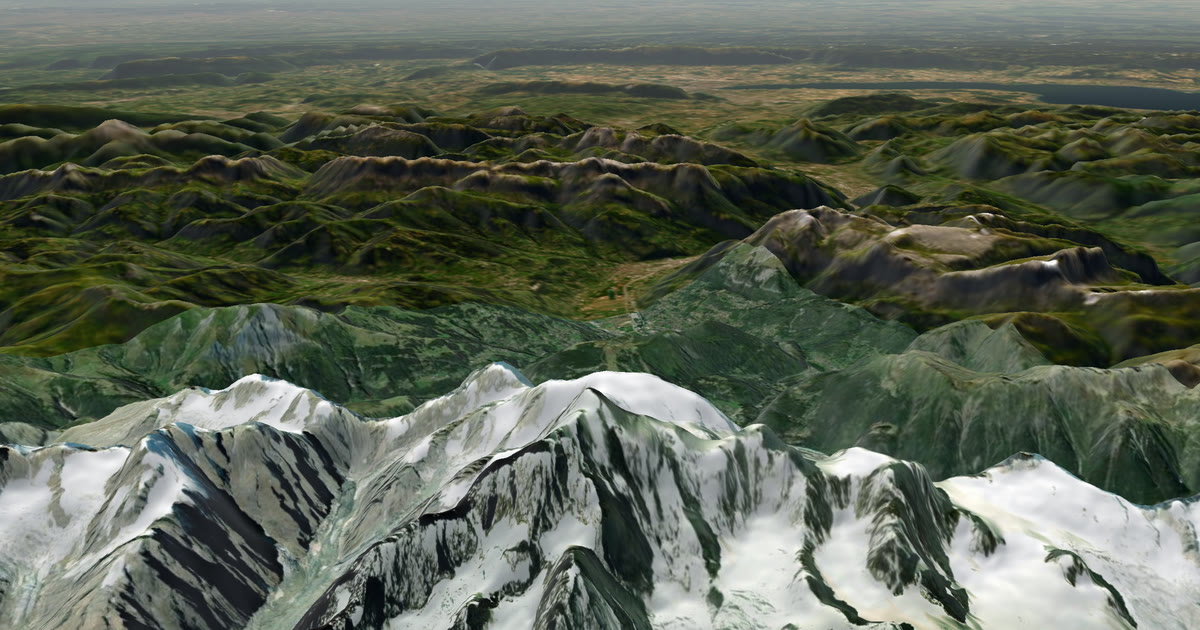 Weather data · Expedition weatherMont Blanc weather by month: summit wind, cold and freezing levelTen years of ERA5 records for Mont Blanc: summit and Goûter-height wind, wind chill, the share of calm hours and the freezing level, by month.
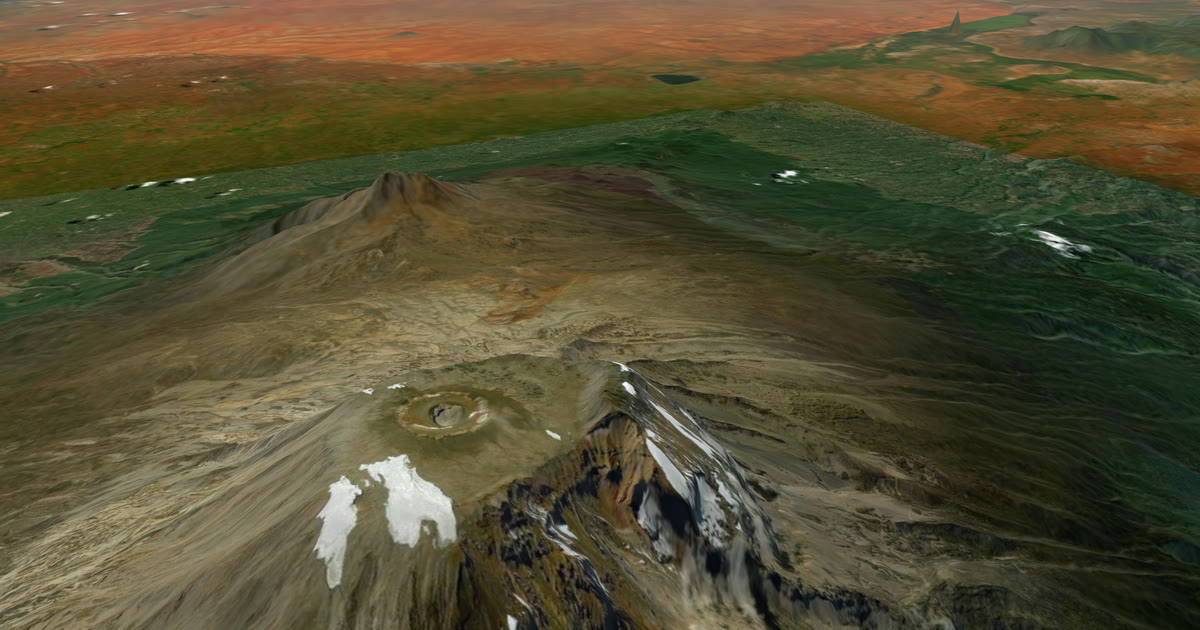 Weather data · Expedition weatherKilimanjaro summit weather by month: wind, cold and wind chillTen years of ERA5 records for Uhuru Peak: summit-night temperature, wind, wind chill and rain by month, and which months are driest and least windy.