Weather data · Expedition weather
Dakar Rally weather: Saudi January, and 2027 in Morocco
By AdventureLive · Updated
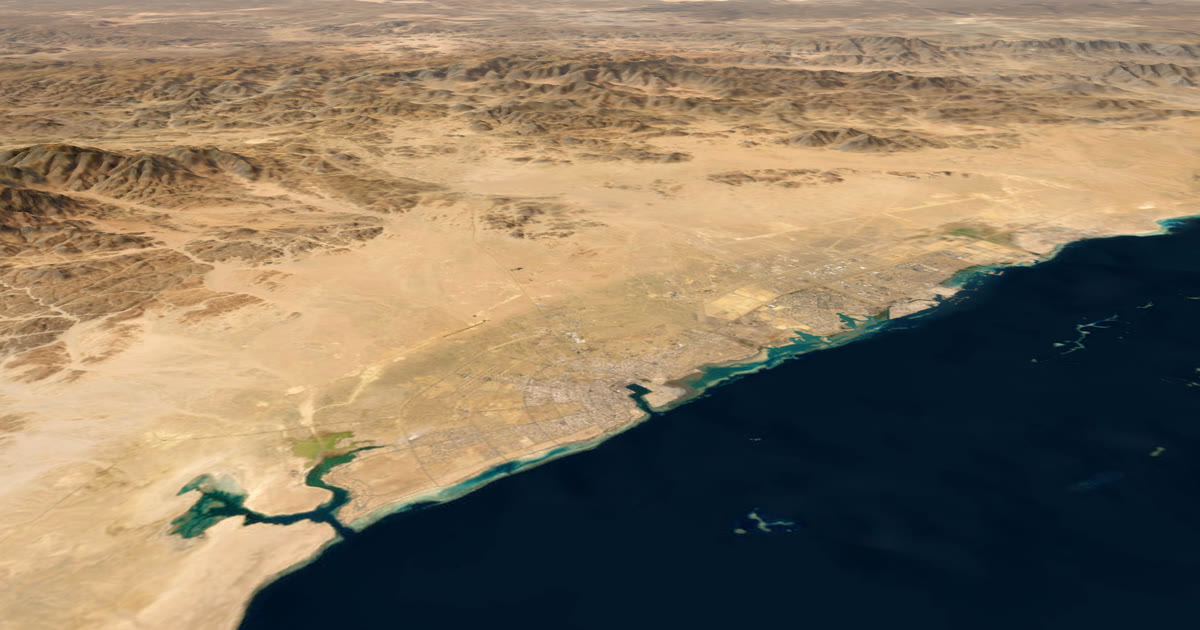
The Dakar is a January race, and for most of its recent history the desert was in Saudi Arabia. That is where our weather data is. The next edition is somewhere else, so this guide says plainly which of our figures apply to which race.
Where is the Dakar in 2027, and what does our data cover?
The official Dakar site (dakar.com, read 13 November 2026) says the 2027 edition runs 9 to 23 January 2027 in Portugal and Morocco. It also says the race returns to Saudi Arabia in 2028, for its 50th edition.
Our data covers Saudi Arabia, in ten years of records at five points. So:
- Saudi Arabia (2026, and from 2028): the figures below.
- January 2027, Morocco: read our Morocco weather by month for Marrakech, Tizi n'Tichka, Ouarzazate and Merzouga, all twelve months. It does not tell you which Moroccan stages the race will use.
- January 2027, Portugal: we have no Portuguese data, so we give no figures. Use a national forecast service.
What is January like in Saudi Arabia?
January afternoons are mild, and inland dawns are cold. Figures are the January means at 15:00 and 06:00 local time (Saudi Arabia is UTC+3), with the hottest and coldest of the ten years where they matter.
| Point | Afternoon | Hottest year | Pre-dawn | Rain |
|---|---|---|---|---|
| Yanbu | 25.0 °C | 26.5 °C | 19.9 °C | 8.5 mm |
| Empty Quarter (Shubaytah) | 24.8 °C | 26.7 °C | 13.1 °C | 4.6 mm |
| Riyadh | 21.1 °C | 23.7 °C | 10.2 °C | 9.1 mm |
| Al-Ula | 20.1 °C | 21.6 °C | 7.7 °C | 3.1 mm |
| Ha'il | 18.1 °C | 19.8 °C | 7.4 °C | 6.9 mm |
Ha'il's coldest January averaged 4.8 °C at 06:00. The wettest of the ten Januaries had 49.6 mm at Riyadh and 31.4 mm at Yanbu, so rain is rare but not zero.
How windy is it?
The January mean wind is 10.5 km/h at Al-Ula to 15.7 km/h at Yanbu. The typical gust, the monthly mean of hourly instantaneous gusts, is 20 to 24 km/h. It is not a storm peak: strong gusts on a ridge or a dune crest can be higher.
| Point | Mean wind (km/h) | Mean from | Typical gust (km/h) |
|---|---|---|---|
| Yanbu | 15.7 | NNW | 23.7 |
| Empty Quarter | 13.5 | N | 20.9 |
| Riyadh | 12.8 | ESE | 20.7 |
| Al-Ula | 10.5 | NW | 20.2 |
| Ha'il | 13.1 | SW | 22.0 |
The direction is the monthly mean of the wind vector. At Ha'il it is only 27% steady, so on any day the wind can come from anywhere.
How do the other months compare?
Afternoon and pre-dawn, in °C, and rain in mm, for four months.
| Point | Jan | Apr | Jul | Oct |
|---|---|---|---|---|
| Yanbu | 25.0 / 19.9 / 8.5 | 29.1 / 24.5 / 1.1 | 34.3 / 29.8 / 0 | 32.7 / 28.2 / 4.5 |
| Empty Quarter | 24.8 / 13.1 / 4.6 | 36.6 / 22.8 / 4.5 | 44.0 / 31.3 / 4.6 | 36.6 / 23.9 / 0.3 |
| Riyadh | 21.1 / 10.2 / 9.1 | 32.8 / 21.1 / 11.9 | 43.7 / 30.7 / 0.2 | 35.0 / 22.3 / 0.8 |
| Al-Ula | 20.1 / 7.7 / 3.1 | 30.3 / 16.6 / 3.2 | 39.0 / 25.7 / 0.1 | 33.3 / 19.6 / 1.5 |
| Ha'il | 18.1 / 7.4 / 6.9 | 29.3 / 16.7 / 19.3 | 40.6 / 27.5 / 0 | 33.3 / 20.1 / 6.8 |
January is the mildest stretch, which is why it suits a race. In July the Empty Quarter averages 44.0 °C in the afternoon with a 31.3 °C pre-dawn, and Riyadh 43.7 °C. All twelve months are in our data.
Source: ERA5 (Copernicus Climate Change Service), 2015–2024.
Method: bilinear-interpolated 0.25° ERA5 values at five points. Temperatures are monthly means of the 12:00 and 03:00 UTC hours. Rain is the daily mean of total precipitation times the days in the month. Wind is the mean of hourly speeds.
Caveats:
- ERA5 is a grid of about 31 km, not a station. The Empty Quarter and Ha'il cells average open desert, so the sand surface in the sun and the coldest clear-sky dawns are more extreme than these 2 m means.
- These are monthly means of two hours of the day. The hottest and coldest days fall outside them.
- Rain in the Arabian desert is patchy, and monthly means are dominated by a few events.
- The stage routes and dates are the organiser's, not ours.
Why does the desert feel different from the table?
A 2 m air temperature is a shade reading, a couple of metres above the ground. A crew on sand in full sun feels more. On a clear night the reverse holds: with no cloud and dry air, the ground loses its heat fast, so a dawn on the dunes can be colder than the cell mean.
Dry air also hides effort. Sweat evaporates quickly, so you can lose a lot of fluid without feeling wet. That matters as much in a mild January as in summer.
What does this mean for a rally raid?
Use typical weather to prepare. For a January start in the Saudi desert, pack for a 10 to 18 °C swing between a mild afternoon and a cold inland dawn. Plan for a cold bivouac, a dry day with a gusty wind, and the odd wet spell. For Morocco, use the Morocco guide, and for any race, the organiser's briefing and the day's forecast come first.
Always check the forecast, local warnings and the organiser's instructions.
Plan it in AdventureLive
The Dakar's own tracking follows the official field. If you drive an amateur raid or a rally of your own, a Garmin inReach or SPOT in the car sends positions by satellite. Link it to AdventureLive, plan the trip at /app/, with a GPX or with no route, and share the link.
When you plan each leg, AdventureLive shows the typical weather for its dates from ten years of records, then the forecast for about the next 10 days once it is near. Followers open the link in any browser, with no app or account. They see your dot, when you were last seen, and the weather where you are now and for the next 48 hours, with alerts for strong wind and gales, freezing or severe cold, heat, heavy rain and thunderstorms.
If you send a HELP message from the tracker, your home contacts get an email with the time and the place. Rescue is Garmin Response's or SPOT's GEOS centre's job. AdventureLive is free, thanks to ProLend.
See the set-up in rally raid live tracking. For another desert, see Marathon des Sables weather. The expedition weather hub has the rest.
Contains modified Copernicus Climate Change Service information (2026). Neither the European Commission nor ECMWF is responsible for any use of this information. The data is licensed under CC BY 4.0.
Questions people ask
- Where and when is the 2027 Dakar Rally?
- The official Dakar site says the 2027 edition runs 9 to 23 January 2027 in Portugal and Morocco, and that the race returns to Saudi Arabia in 2028 for its 50th edition.
- Does your data cover the 2027 route?
- Only in part. Our Saudi figures cover the 2026 race and the return in 2028. For Morocco we have a separate guide for Marrakech, Tizi n'Tichka, Ouarzazate and Merzouga. We have no Portuguese data.
- How hot is the Dakar in Saudi Arabia in January?
- Afternoons average 25.0 °C at Yanbu, 24.8 °C in the Empty Quarter, 21.1 °C at Riyadh, 20.1 °C at Al-Ula and 18.1 °C at Ha'il. The hottest of the ten Januaries at each point was 1 to 3 °C higher.
- How cold are the nights?
- Inland they are cold. January dawns average 13.1 °C in the Empty Quarter, 10.2 °C at Riyadh, 7.7 °C at Al-Ula and 7.4 °C at Ha'il, where the coldest year averaged 4.8 °C. Yanbu on the coast is milder, at 19.9 °C.
- Does it rain in the Saudi desert in January?
- A little, on average: 3 to 9 mm. Yanbu averages 8.5 mm and Riyadh 9.1 mm, but the wettest of the ten Januaries had 49.6 mm at Riyadh and 31.4 mm at Yanbu. Rain is patchy and comes in a few events.
- Can my family follow me on a rally raid?
- Yes. Link a Garmin inReach or SPOT to AdventureLive, plan the rally as a trip with legs, and share the link. Followers see your dot on a 3D map and the weather where you are, with alerts for heat, wind and heavy rain.
Sources
- Dakar Rally official site (2027 edition 9 to 23 January 2027 in Portugal and Morocco; Saudi Arabia returns in 2028 for the 50th edition), read 13 Nov 2026
- Copernicus Climate Data Store: ERA5 monthly averaged data on single levels
- Copernicus Climate Change Service: ERA5 explained
- Contains modified Copernicus Climate Change Service information (2026)
Related guides
 Guide · Expedition weatherExpedition weather by month, from ten years of recordsTypical weather by month for Kilimanjaro, the Atlantic row, the Marathon des Sables and Namibia, from ten years (2015–2024) of ERA5 records.
 Guide · Live trackingRally raid live tracking: Dakar-style races and amateur raidsThe Dakar's tracking is the organiser's. For amateur raids and road rallies like the Mongol Rally, here is how family can follow you, with the weather.
 Weather data · Expedition weatherMorocco Atlas motorbike weather by month (Tizi n'Tichka)Ten years of ERA5 records for Marrakech, Tizi n'Tichka, Ouarzazate and Merzouga: temperature, rain and snow by month, and the best months to ride.
 Weather data · Expedition weatherMarathon des Sables weather: how hot is April in the Sahara?Ten years of ERA5 records for Merzouga and Erg Chebbi: April afternoons average 29.4 °C, pre-dawn 17.7 °C, humidity 13%. All twelve months in a table.
 Weather data · Expedition weatherNamibia weather by month for overlandingTen years of ERA5 records for Windhoek, Sossusvlei and Etosha: rain, afternoon and pre-dawn temperatures by month, and the best months to go by region.