Weather data · Expedition weather
Atlantic rowing weather by month: the trade winds to Antigua
By AdventureLive · Updated
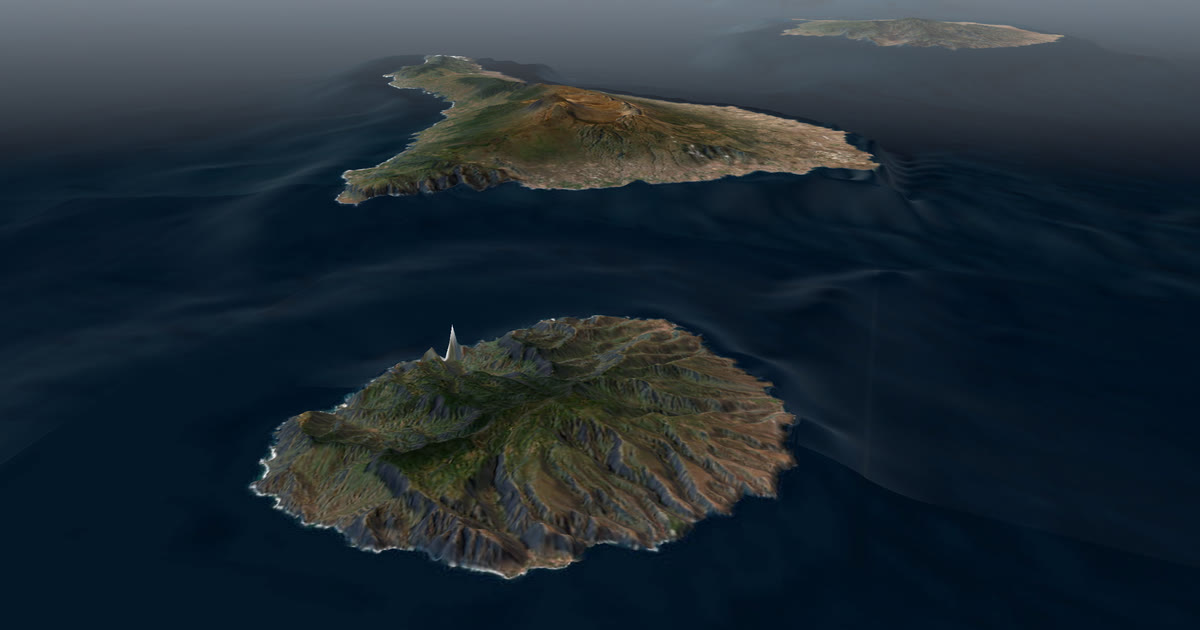
The Atlantic row runs west, with the wind behind it. This guide shows how strong that wind is, how steady, how warm the sea is and how much it rains, for every month of the year, from ten years of records.
What is the best month to row the Atlantic?
December to February. In those months the trade wind averages about 14 knots at mid-ocean, from the east-north-east, almost straight behind a boat heading west.
At 21°N 38°W, December averages 13.9 knots with 79% of it following. January averages 13.8 knots (78% following). February averages 14.5 knots (88% following), or 12.8 knots of push along the route.
What does the year look like at mid-ocean?
The table is for the mid-ocean point at 21°N 38°W, on the great circle from La Gomera to Antigua. The race season (December to February) is in bold.
| Month | Wind (kn) | From | Following share | Sea temp (°C) | Rain (mm) |
|---|---|---|---|---|---|
| Dec | 13.9 | E | 79% | 25.5 | 50 |
| Jan | 13.8 | ENE | 78% | 24.3 | 40 |
| Feb | 14.5 | ENE | 88% | 23.7 | 23 |
| Mar | 14.0 | ENE | 90% | 23.6 | 20 |
| Apr | 12.0 | ENE | 79% | 23.9 | 16 |
| May | 12.5 | ENE | 94% | 24.6 | 14 |
| Jun | 13.6 | ENE | 93% | 25.3 | 10 |
| Jul | 15.6 | ENE | 96% | 25.6 | 16 |
| Aug | 14.1 | ENE | 94% | 26.3 | 34 |
| Sep | 14.0 | ENE | 87% | 26.9 | 77 |
| Oct | 11.9 | E | 90% | 27.1 | 36 |
| Nov | 12.1 | ENE | 86% | 26.5 | 37 |
Source: ERA5 (Copernicus Climate Change Service), 2015–2024.
Method: monthly means for 2015–2024 at 21°N 38°W, interpolated from the 0.25° ERA5 grid: 10 m wind speed, the direction it blows from, the part of the wind along the westbound route, sea surface temperature, and total rain (monthly total).
Caveats:
- ERA5 is a grid of about 31 km. These are monthly averages, not a forecast.
- "Following share" is the part of the average wind that pushes the boat west, as a share of the wind speed. Near 100% means a steady tailwind.
- Wind is at 10 m above the sea.
- Rain at sea falls mostly in short squalls.
- Individual days vary a lot. A 14-knot average hides calms and spells above 25 knots.
Why do rowers start between December and February?
Wind is only part of the answer. The numbers say the season is chosen for safety and sea state, not for the strongest wind.
July has the strongest trade wind at mid-ocean: 15.6 knots, with 96% following. But July to October is in the Atlantic hurricane season. The winter window avoids it.
Rain shows the same pattern. At 18.5°N 50°W, September averages 90 mm and October 75 mm. In February it is 36 mm. At Antigua, September is 130 mm and October 117 mm, against 46 mm in February.
The winter wind is also steady and behind you. At 18.5°N 50°W, 91% of the January and February wind is a tailwind. At Antigua, January to March run at 91–94% following.
So the season trades a little wind speed for a much calmer outlook. For how rowers track and share the crossing, see ocean rowing live tracking.
What is the first stretch like?
The lightest and least steady wind is near the start. Off La Gomera, January averages 10.2 knots from the north-east, and only 60% of it helps a westbound boat. Wind steadiness is 64%.
By 24.5°N 27°W, January averages 14.4 knots from the east-north-east, with 72% following. The steady trades set in from about 27°W westwards.
Expect the first days to be the most changeable. Plan your rest and watch the wind direction.
How does the wind change along the route?
Here is January, in the race season, at all five points.
| Point | Wind (kn) | From | Following share |
|---|---|---|---|
| La Gomera (start) | 10.2 | NE | 60% |
| 24.5°N 27°W | 14.4 | ENE | 72% |
| 21°N 38°W | 13.8 | ENE | 78% |
| 18.5°N 50°W | 14.1 | ENE | 91% |
| Antigua (finish) | 13.9 | E | 94% |
The wind gets both steadier and more helpful as you go west.
How warm is the sea?
Sea temperature rises as you head south and west. In January it is about 21 °C near the start (19.6 °C at La Gomera itself, cooled by the Canary current), 24.3 °C at 21°N 38°W and 26.8 °C at Antigua.
February is similar: 26.4 °C at Antigua. Air temperature runs 1–2 °C cooler than the sea. At Antigua in January it averages 25.3 °C.
How much does it rain?
Little, in the race season. At the mid-ocean points, December to February runs from about 16 mm to 60 mm a month. Antigua averages 38 mm in January and 46 mm in February.
The wet season is September to November. Antigua averages about 115–130 mm a month in September and October.
How steady is the wind?
Steadiness measures how consistent the direction is, from 0 to 100%. Higher means a more reliable push from one side.
At 21°N 38°W, January steadiness is 78% and February 89%. At 18.5°N 50°W, both months are 92%. Near La Gomera, January is 64%. So the wind is most dependable in the second half of the crossing, and least dependable at the start.
What does this mean for planning?
Use typical weather to choose a start window and to pack. Then watch the forecast as the date nears.
- Pick the window by sea state and safety, not only wind. The numbers support a December to February start.
- Expect a light, changeable start. Wind steadiness is lowest off La Gomera.
- Expect warm water and warm nights by the second half.
- Plan for the spread. Averages hide the calms and the gales.
Typical weather helps you choose and prepare. Always check the forecast and local warnings before you go.
How will my family follow the row?
A row is one leg with no route. Link your inReach or SPOT, share the trip link, and your family see your dot and the line you have actually travelled, on a 3D map. They also see the weather where you are, now and for the next 48 hours: wind, temperature, rain and storms.
AdventureLive shows the typical weather for your dates when you plan the leg, and the forecast closer in. It is free, thanks to ProLend. See ocean rowing live tracking for the set-up, or go back to the expedition weather hub.
Contains modified Copernicus Climate Change Service information (2026). Neither the European Commission nor ECMWF is responsible for any use of this information.
Questions people ask
- What is the best month to row the Atlantic?
- Rowers start in December to February. In those months the trade wind averages about 14 knots at mid-ocean, and 79–88% of it blows behind a westbound boat at 21°N 38°W. July has a stronger wind, but it is in hurricane season.
- What wind will I have on the Atlantic row?
- On average about 14 knots from the east-north-east to east at mid-ocean in January and February. That is about 26 km/h. It is an average. There are calm days and spells above 25 knots.
- How warm is the sea on the Atlantic row?
- About 21 °C near La Gomera in January, rising to about 26–27 °C near Antigua. At Antigua, January sea temperature averages 26.8 °C and February 26.4 °C.
- Does it rain during the Atlantic row?
- Not much in the race season. At mid-ocean points, roughly 16–60 mm a month from December to February, and Antigua averages 38 mm in January and 46 mm in February. Rain falls mostly in short squalls.
- Can my family follow me while I row?
- Yes. Link your inReach or SPOT to AdventureLive, add the row as a leg with no route, and share the trip link. Followers see your dot and the line travelled, with the weather where you are.
Sources
Related guides
 Guide · Expedition weatherExpedition weather by month, from ten years of recordsTypical weather by month for Kilimanjaro, the Atlantic row, the Marathon des Sables and Namibia, from ten years (2015–2024) of ERA5 records.
 Guide · Live trackingHow to let family track you live while rowing an oceanRowing an ocean? Carry an inReach or SPOT and share one AdventureLive link so family see your dot and the weather where you are, even weeks from land.
 Guide · Live trackingHow to let family track your sailing passage liveSailing offshore or crossing with a rally like the ARC? Carry a satellite tracker and share one AdventureLive link with a map and your weather.
 Guide · Satellite trackersinReach vs SPOT vs ZOLEO for expeditionsinReach, SPOT and ZOLEO compared for expeditions: networks, coverage, tracking intervals, SOS, plan prices and weights, and which work with AdventureLive.